August 26, 2025
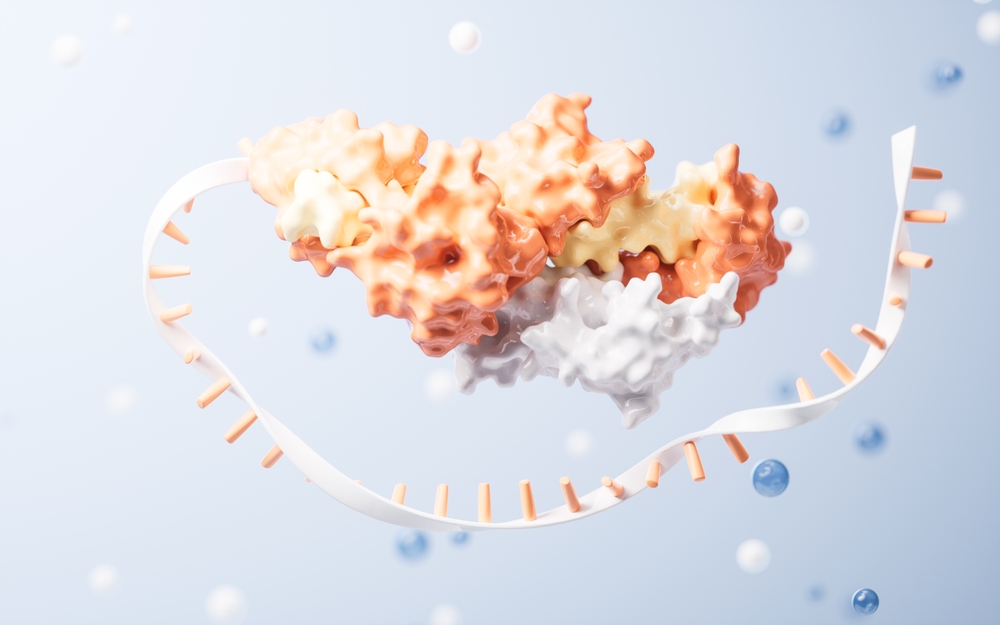
A new therapeutic modality, tiRNA (translation inhibition RNA), works by inhibiting translation of a protein. Most therapeutic modalities target a protein in the body to inhibit, suppress, block or degrade the protein. Certain therapeutic modalities target the mRNA that codes for the target protein, such as ASOs and siRNAs. ASOs can bind to mRNA and block the necessary proteins from translating the mRNA into the target protein. But tiRNA don’t just bind to mRNA to block out ribosomes and other RNA binding proteins. They are actually chimeras – having two different binding moieties joined by a linker.
tiRNAs have three parts: two binding moieties joined by a linker. One binding moiety binds to the 5’ untranslated region (5’UTR) of the target mRNA. The 5′ untranslated region is upstream from the initiation codon on a mRNA strand. This binding moiety is complementary to the 5’UTR. The second binding moiety binds to eIF4G (eukaryotic translation initiation factor 4 G), which is a protein involved in translation initiation. eIF4G is an interesting protein to target to prevent translation of mRNA into a protein because eIF4G is part of a complex that recruits the pre-initiation complex (PIC). The PIC is needed in order for translation to begin. By binding and immobilizing eIF4G, the PIC can’t be recruited, translation is inhibited, and the target protein is not produced.
The two binding moieties of tiRNAs have different composition of matter. The binding moiety that is complementary to the 5’UTR is an oligonucleotide and the moiety that binds to eIF4G can be a peptide, small molecule, small protein, or an aptamer. A linker connects and spatially separates the two binding moieties. However, the tiRNA gets its specificity from the 5’UTR binding moiety. tiRNAs can target different mRNA strands based on the sequence of the oligonucleotide binding moiety of the tiRNA.
You can read more about tiRNAs here. Need to understand therapeutic modalities? Science for Bankers offers a MasterClass on therapeutic modalities which covers their composition of matter, mechanism of actions, how they are leveraged to treat diseases and disorders, and more.
Science for Bankers focuses on all things therapeutic modalities – tracking new innovations and discoveries, while offering a MasterClass on therapeutic modalities.