July 31, 2025
Several molecular glues and degraders (or PROTACs) are currently in pre-clinical and clinical development. But a new small molecule therapeutic modality has emerged: molecular gates that are being developed by Gates Biosciences.
Molecular glues and degraders are small molecule therapeutic modalities and are covered in Science for Bankers’ Modalities MasterClass. Molecular gates are also small molecules, but they have a completely different mechanism of action for targeting proteins. They work by binding and retaining a target protein within a cell so it can’t leave the cell. Retaining the target protein prevents it from reaching its desired location outside the cell and prevents it from performing its function.
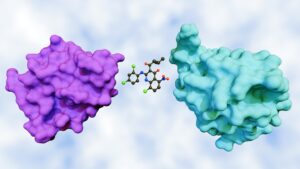
Once made by a ribosome, a protein can remain in the cell (an intracellular protein) or it can leave the cell (an extracellular protein). If a protein needs to leave the cell in order to perform its function, it is secreted from the cell via a secretory pathway, or channel. A molecular gate molecule binds to the target protein and to the secretory channel, thus preventing the target protein from leaving the cell. Thus, molecular gates are able to target extracellular proteins by retaining them within cells.
This clever approach expands the therapeutic possibilities for drugging extracellular proteins. Further, molecular gates have the potential to make certain undruggable proteins, druggable.
Science for Bankers centers on therapeutic modalities, offering our Modalities MasterClass, our Modalities Watch Blog, and Modalities Training. Our Modalities MasterClass gets you up to speed on therapeutic modalities and our Modalities Watch Blog keeps you current. A must for any ambitious life sciences professional.