July 22, 2025
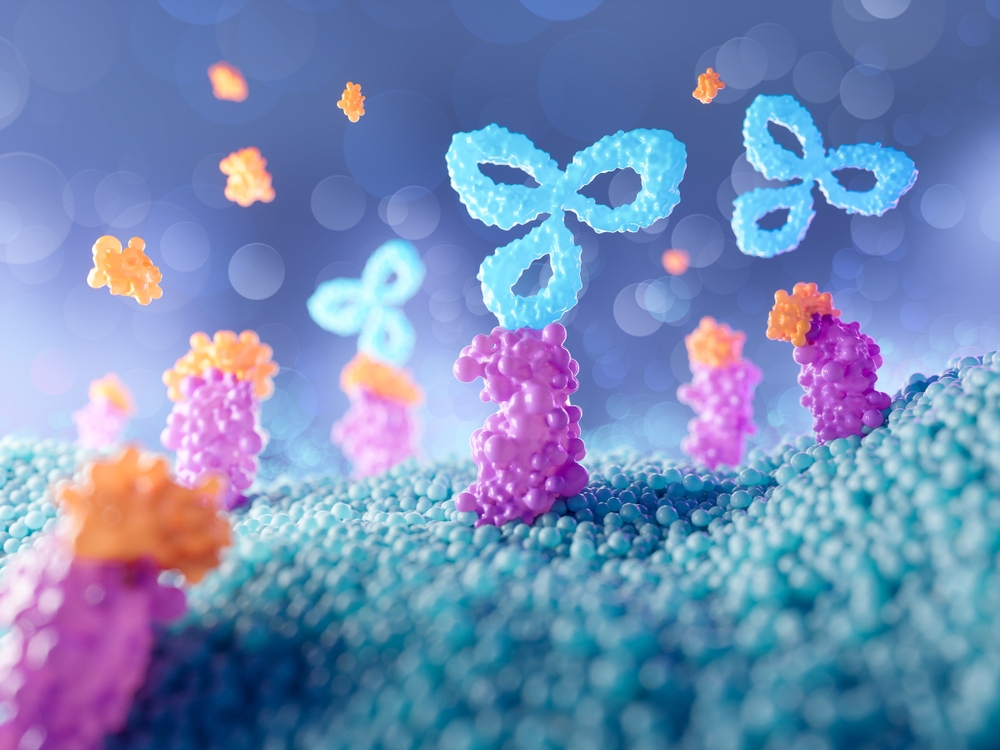
Traditional antibodies are designed to bind to a target with a high affinity and then block some function of the target. For example, Opdivo is an antibody that binds to the PD-1 receptor to block its function. But antibody technology is evolving and moving beyond the traditional bind and block mechanisms of actions. Currently, scientists are investigating how to design antibodies with binding affinities that fluctuate based on the pH of the local environment.
Antibodies can bind at two different locations on the antibody. They can bind at the variable region and then can bind at the Fc region. Many antibodies in the clinic and that are approved have an extended half-life via recycling through binding with the neonatal Fc receptor (FcRn). It has been reported that the binding between the Fc region of the antibody and the FcRn is highly pH-dependent. Ideally, an antibody would bind to the FcRn in an acidic environment (like in an endosome) and dissociate from the FcRn at neutral pH (in the bloodstream). Thus, antibodies that are pH responsive are able to leverage the natural recycling function of the FcRn.
Besides endosomes, tumor microenvironments and areas of inflammation and ischemia are often acidic. Antibodies with binding affinities that fluctuate based on the local pH environment may be able to overcome some of the limitations of traditional antibodies. For example, where an antibody’s target is ubiquitously distributed throughout the body, a pH responsive antibody would have an enhanced binding affinity in the tumor microenvironment and areas of inflammation and ischemia. Fine tuning antibody binding to its target in these desired locations can lower off-target binding events, lower adverse effects, and improve therapeutic efficacy. pH responsive antibodies could facilitate precise targeting of cells in the treatment of major diseases and disorder.
Science for Bankers focuses on the science in life sciences. Our Modalities Watch Blog tracks developments in therapeutic modalities and our Modalities MasterClass provides everything you need to know about therapeutic modalities in one place (small molecules, antibodies, fusion proteins, ASOs, siRNAs, miRNAs, gene therapy, cell therapy, etc.). Enroll today in our Modalities MasterClass and be science savvy for your next life science deal.